

Princess Leonor will learn to fly the modern Pilatus PC-21 trainer aircraft – She will accumulate between 50 and 60 hours of theory and simulator training before her “suelta”, the first solo flight
The General Air and Space Academy (AGA) in San Javier is hosting the 78th Promotion, which includes the Alférez Borbón, H.R.H. the Princess of Asturias. This third year of her military training introduces her to the discipline of flight, the most technical and demanding stage of the entire program, and completes the cycle she began in Zaragoza and later continued in Marín.
September 1st induction
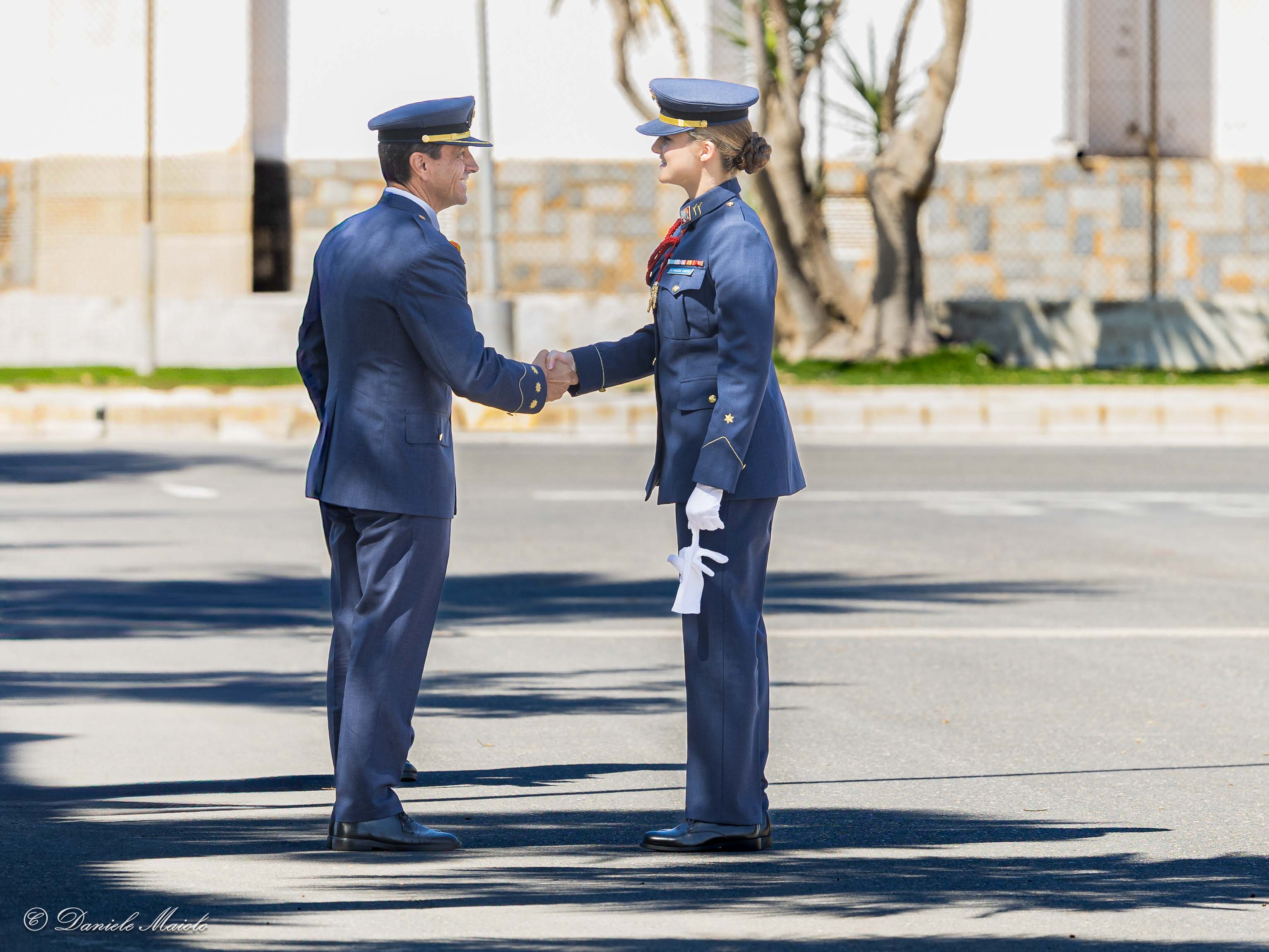
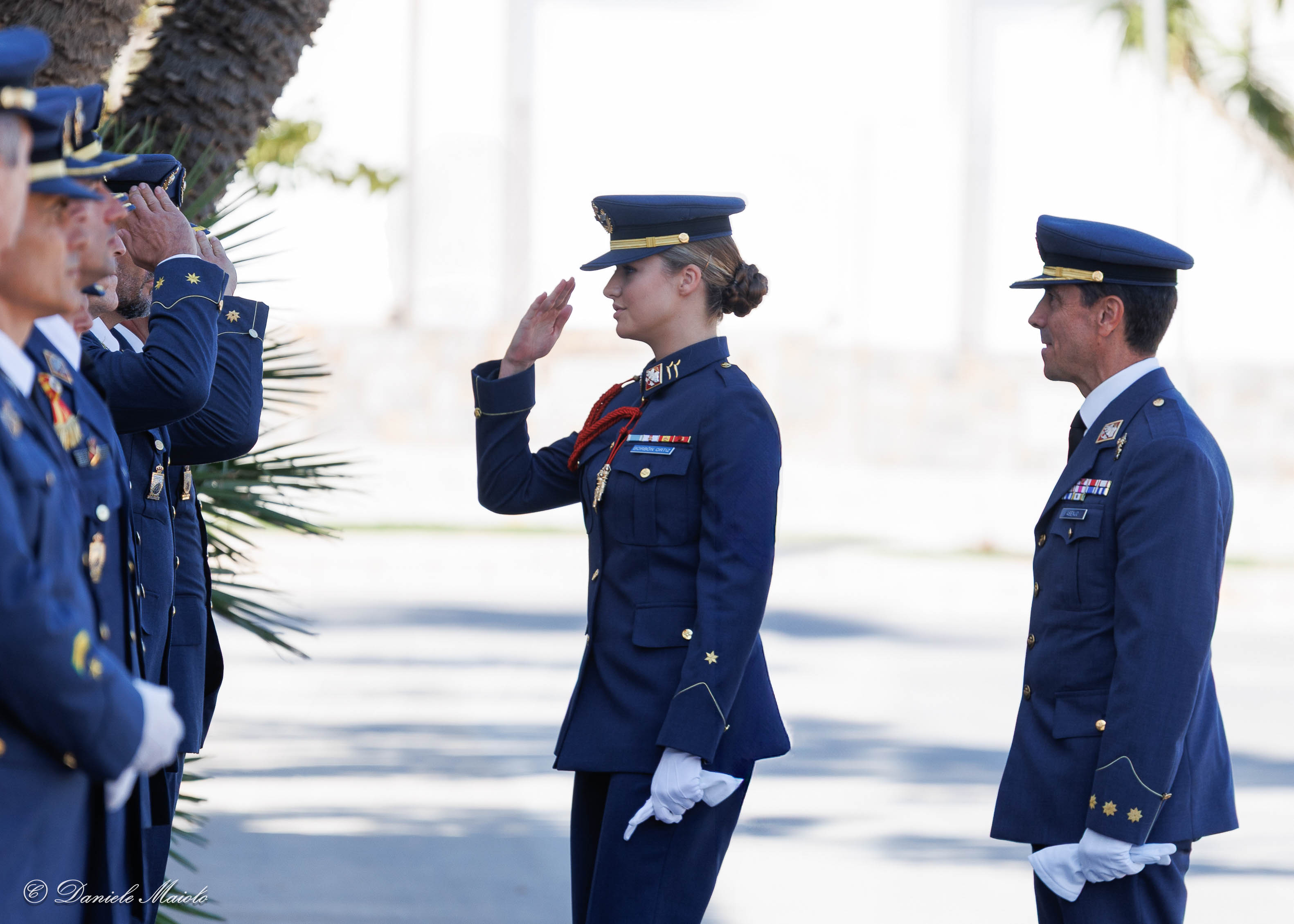
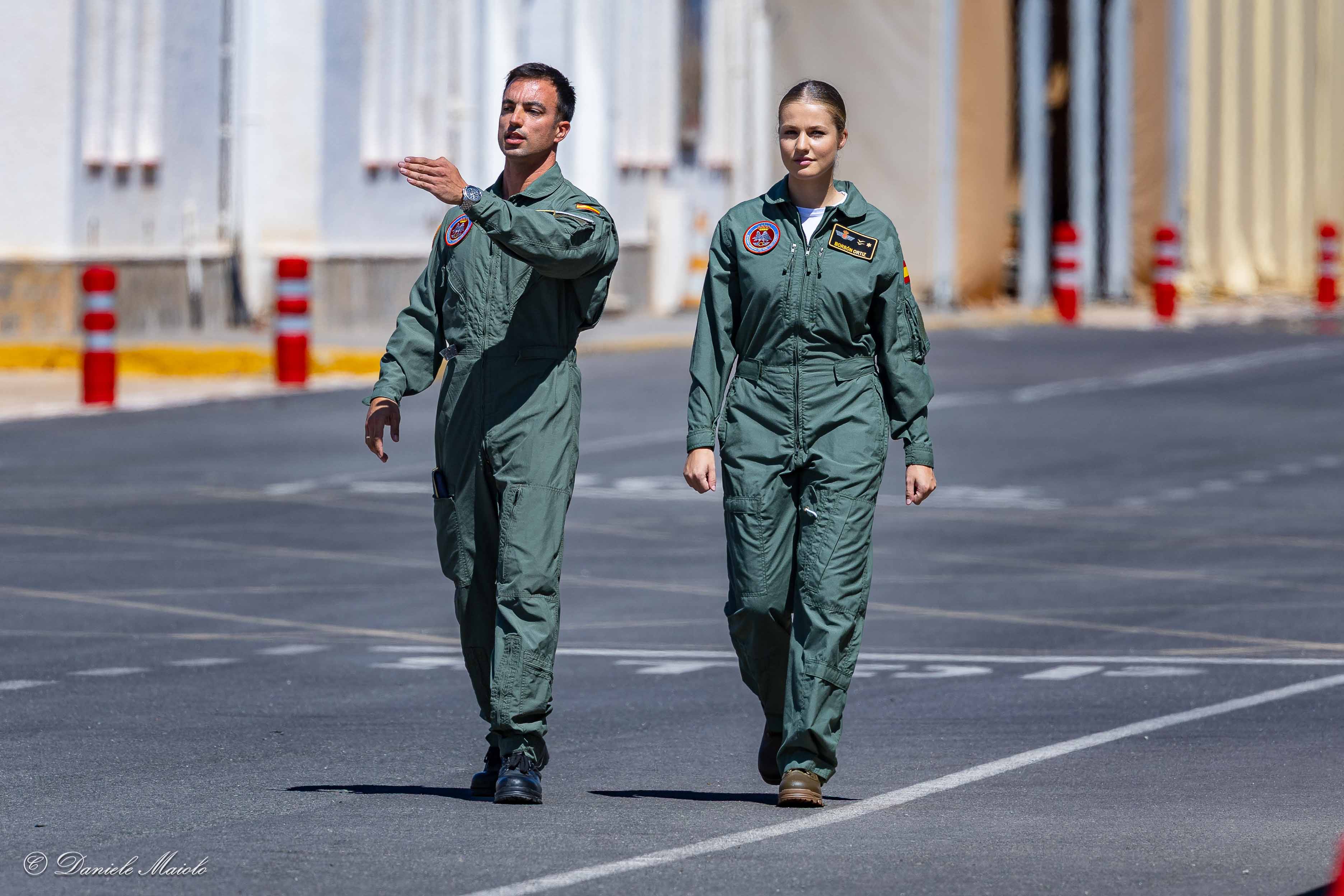
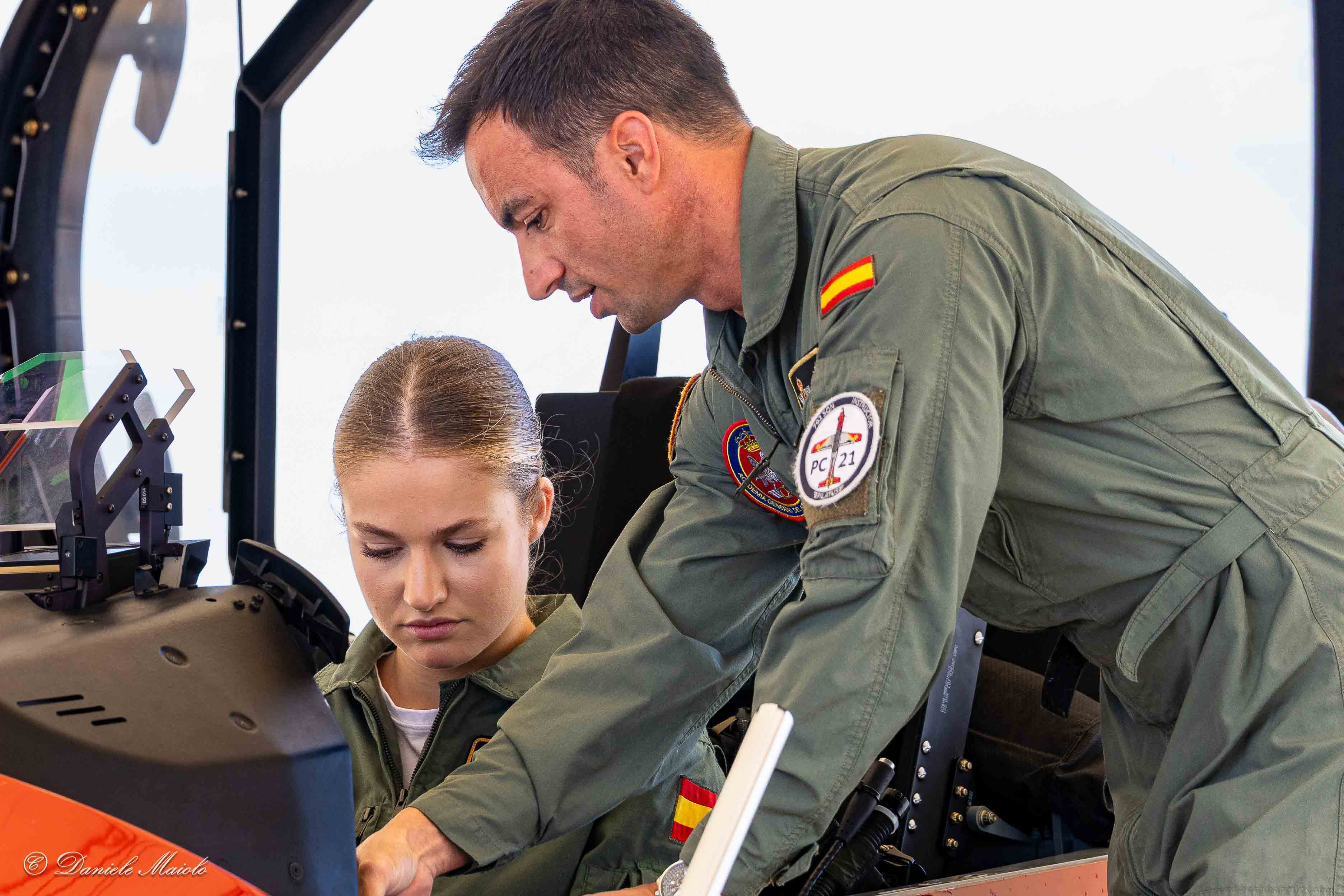
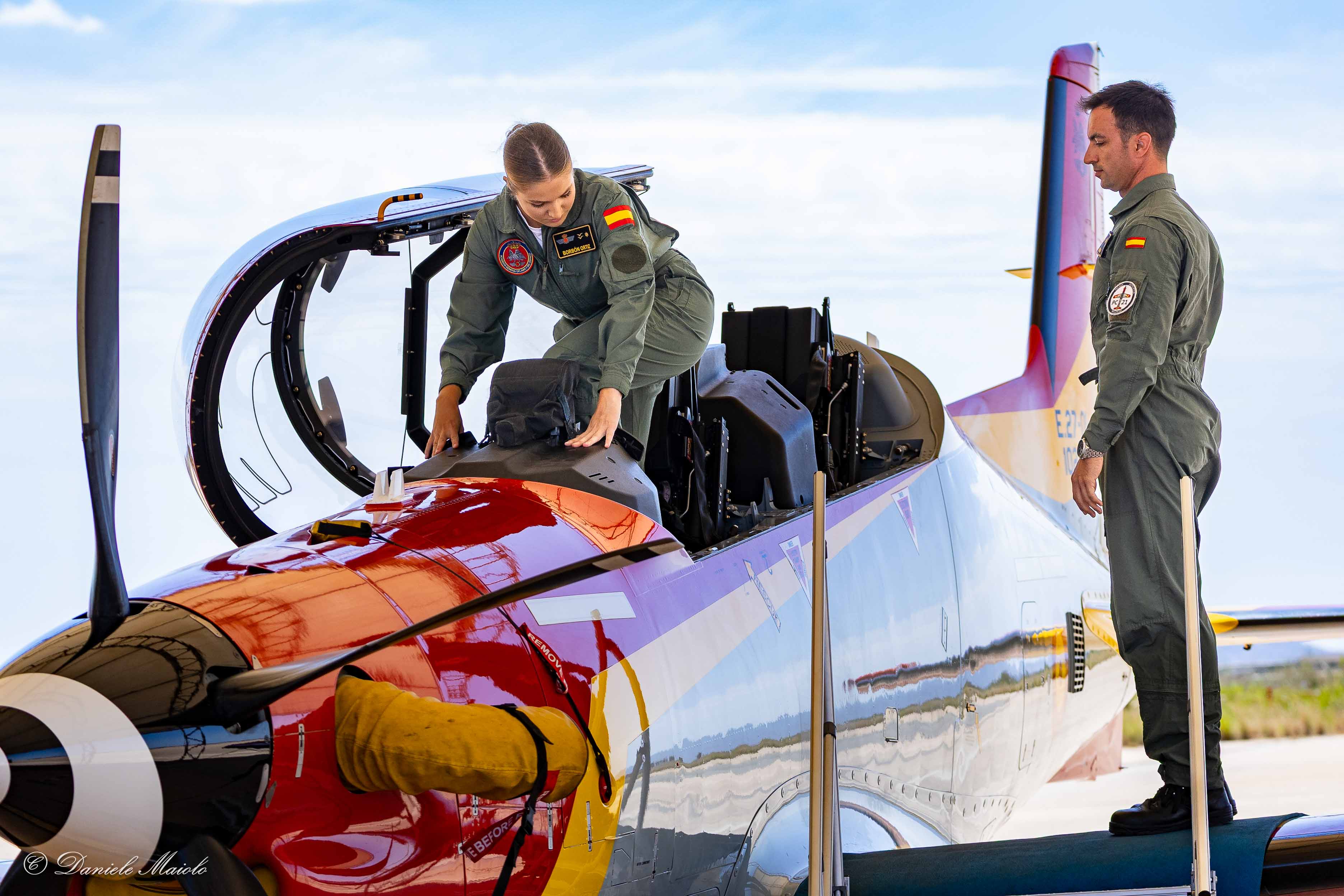
Princess Leonor arrived at the AGA at 12:00 on 1st September 2025, officially joining the course alongside her 74 classmates. She greeted the Academy’s senior officers and visited the simulation facilities, where she became familiar with the integrated training system that precedes real flight. The day also included a first close-up view of one of the Pilatus PC-21 aircraft, the platform on which she will carry out her aerial training.

Pilatus PC-21: a high-performance turboprop trainer
The Pilatus PC-21, designated E.27 in the Spanish Air and Space Force, is the cornerstone of the new training model at San Javier. Designed by the Swiss company Pilatus Aircraft, it represents a significant leap forward compared to the C-101 Aviojet, which trained generations of Spanish pilots.
The PC-21 is a single-engine turboprop powered by a Pratt & Whitney PT6A-68B, delivering 1,600 shp. Its performance places it between basic trainers and advanced jet trainers:
● Maximum speed: 370 knots (approx. 685 km/h)
● Rate of climb: 4,000 ft/min
● Service ceiling: 38,000 ft
● Maximum range: over 1,300 nautical miles with external tanks
● Maneuverability: +8/-4 g
These figures allow cadets to train in a highly demanding environment with wide safety margins. Its fuel efficiency and lower operating cost compared to a jet make it possible to extend flying hours without excessive expense.
A cockpit designed for the future
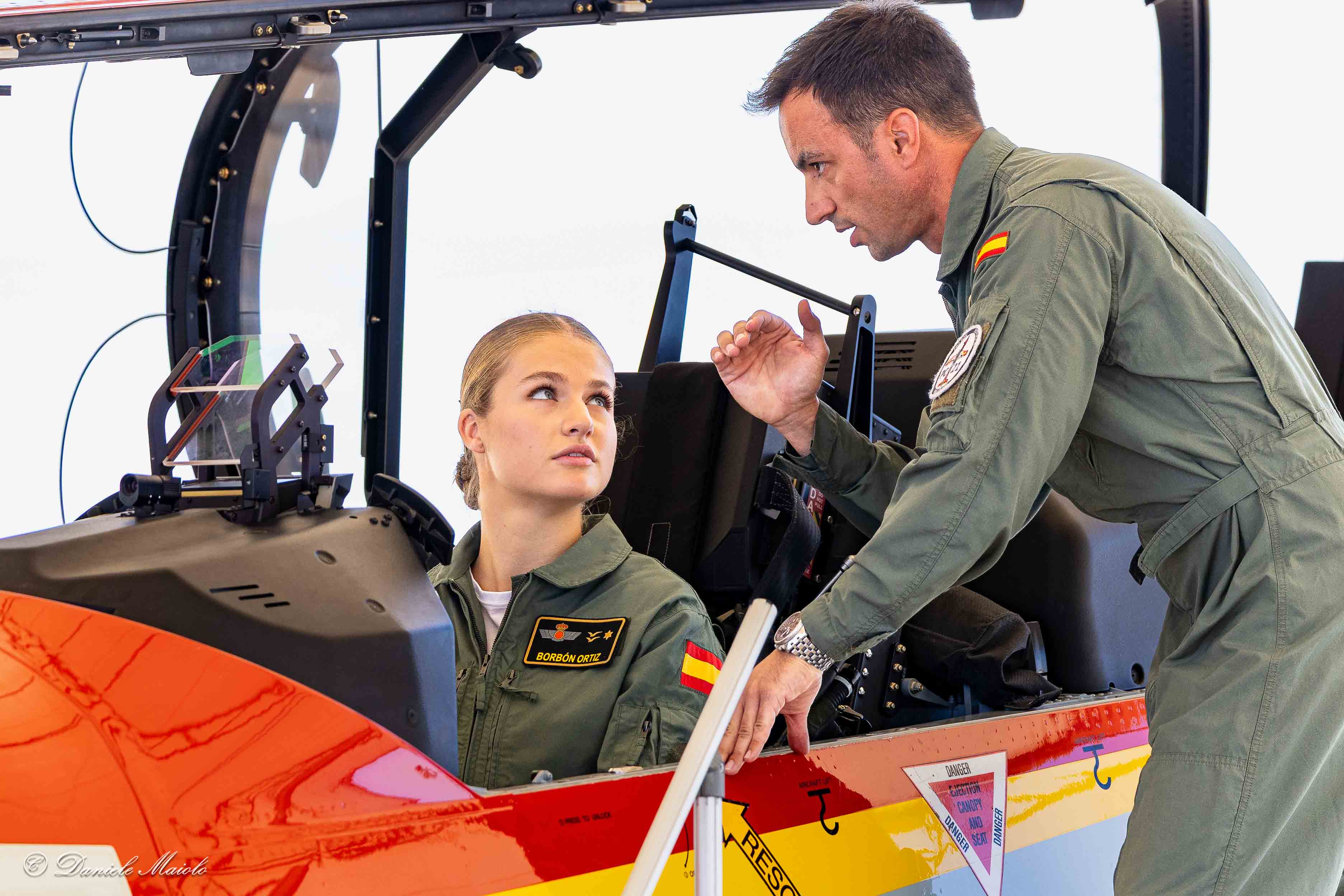
The PC-21’s cockpit reproduces the architecture of a modern combat aircraft. It is equipped with a glass cockpit featuring three color multifunction displays, a Head-Up Display (HUD), and HOTAS (Hands On Throttle And Stick) controls. This setup immerses students in sensor management, digital navigation, and advanced communications, bridging the gap to frontline fighters such as the Eurofighter Typhoon and the future FCAS.
Another notable feature is the embedded simulation system, which allows instructors to program failures, emergencies, and tactical scenarios directly into the aircraft. From the rear cockpit, instructors can trigger incidents in real time, testing cadets’ reactions under stress and replicating operational conditions.
The integrated training system
Training at AGA is built around an Integrated Training System (ITS) that combines classroom, simulation, and real flight into a closed learning cycle:
● CBT (Computer-Based Training): theoretical instruction via digital platforms.
● CPT (Cockpit Procedure Trainers): procedural trainers to practice cockpit sequences.
● FTD (Flight Training Devices): advanced simulators with 180° vision and realistic flight dynamics.
● MPS/MPD (Mission Planning & Debriefing): systems for mission planning and post-flight analysis.
The philosophy is simple: plan, fly, analyze. Each real flight is supported by multiple hours of preparation and debriefing, maximizing learning outcomes while minimizing risks.
Cadet progression
Students begin with theory and simulators, typically logging 50 to 60 hours before moving to the aircraft. The first flights are conducted with an instructor, covering basic maneuvers, emergency procedures, and instrument navigation. Training then advances to low-level navigation, formation flying, and initial tactical missions.
The milestone of this progression is the “suelta”, the first solo flight, a rite of passage in pilots training. It is scheduled individually, depending on each cadet’s performance and instructor evaluation.




The final stage of a joint training path
With this course, Princess Leonor completes her joint military training in the Army, Navy, and Air Force. After the academic rigor of Zaragoza and the naval experience at Marín and aboard the Juan Sebastián de Elcano, San Javier represents the decisive leap into the air.
The PC-21 and its integrated training system place her before the most demanding challenge of her military career: learning to fly as a military pilot, under the same discipline and requirements as her fellow cadets.
From San Javier (Spain): Ramón Ignacio Martín Corral
Gallery:

Scopri di più da Best Shot Aircraft
Abbonati per ricevere gli ultimi articoli inviati alla tua e-mail.
 Best Shot Aircraft