
El 11.º Entrenamiento Europeo de Reabastecimiento en Vuelo refuerza el poder aéreo europeo bajo el liderazgo del EATC.

A Shared Atlantic Sky
On 29 October 2025, Lanzarote Air Base once again became the focal point of allied air interoperability. The European Air Transport Command (EATC) conducted the 11th edition of the European Air Refuelling Training (EART 2025), integrated within Ocean Sky 2025, led by the Spanish Air and Space Force.
The theme “Strengthening Allied Air Power Through Interoperability and Innovation” perfectly captured the spirit of the event — a commitment to enhancing European airpower through cooperation, innovation, and realistic joint training.
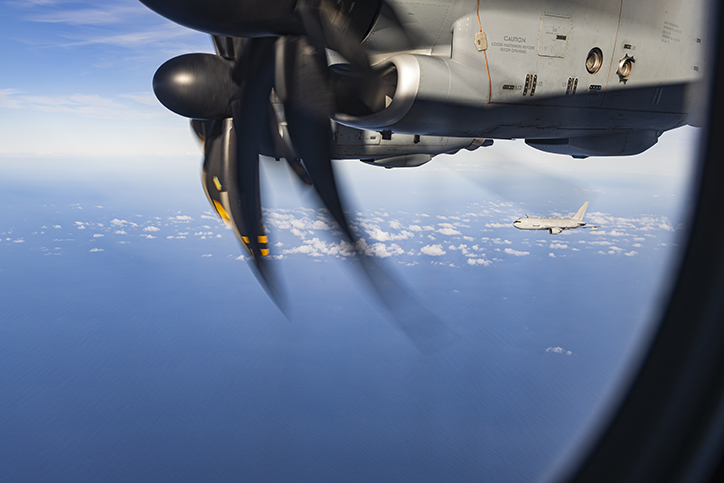
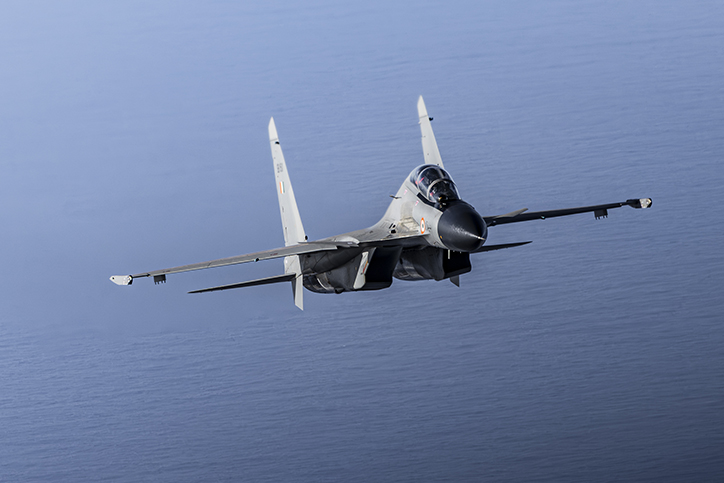
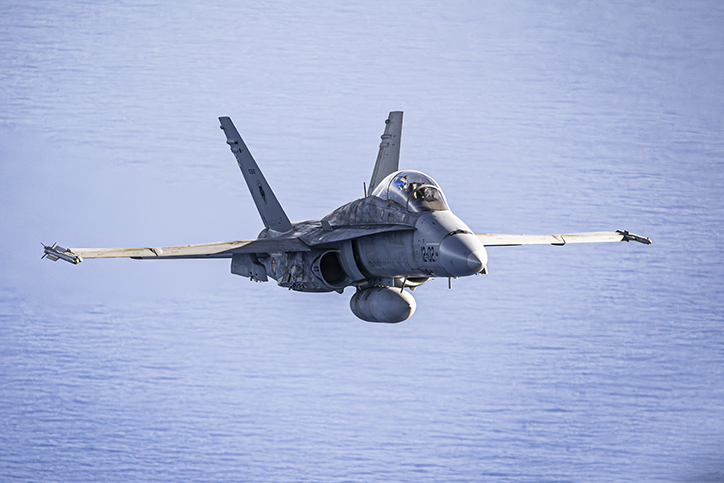
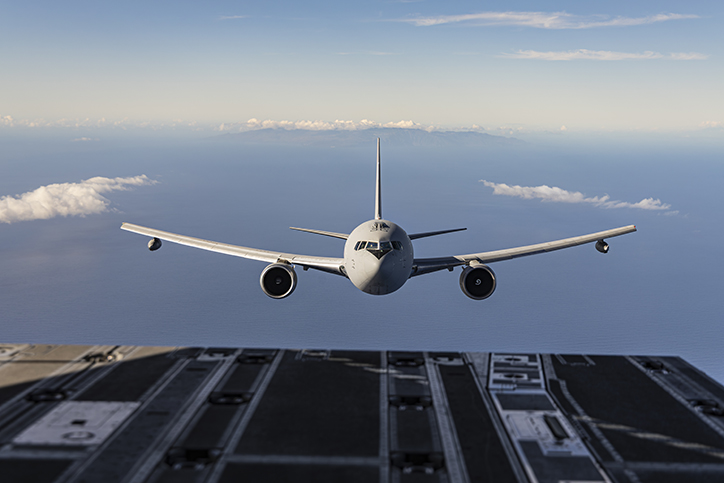
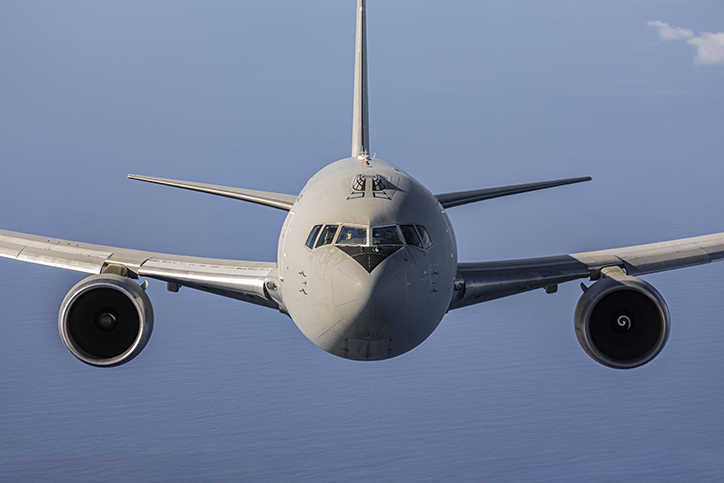
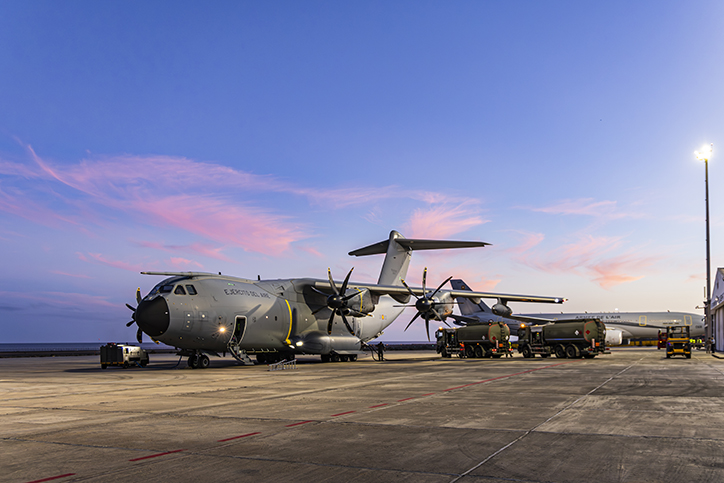
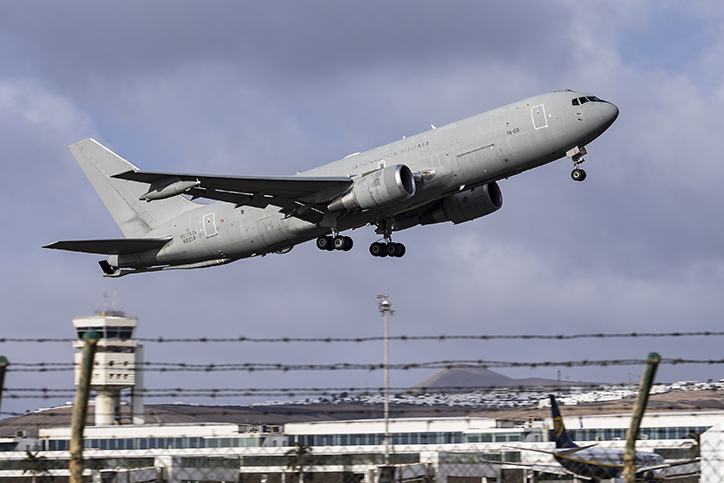
Over two weeks, the Canary Islands hosted Europe’s leading tanker fleets — A400M, A330 MRTT Phénix, KC-767, and the MMU KC-30M — which executed combined air-to-air refuelling missions with F-15s, F-16s, F-18s, Eurofighter Typhoons, and Su-30s, all under authentic operational conditions.
Interoperability and Innovation as Core Principles
The purpose of EART 2025 remained clear: to increase mission readiness, refine advanced AAR tactics, and share operational experience among nations in a dynamic multinational environment.
But this year, the EATC added a new dimension — innovation and sustainability — through two flagship initiatives: X-Maintenance and Combined Air Terminal Operations (CATO).
X-Maintenance promotes cross-national aircraft maintenance cooperation. Technicians from different air forces work under shared EASA-standard procedures, ensuring safe and efficient maintenance regardless of national origin — saving manpower, resources, and time.
CATO integrates multinational ground and terminal operations, streamlining logistics and improving throughput coordination.
Together, these programs illustrate the EATC’s evolution toward a truly integrated and sustainable European air mobility system.
A Multinational Command Structure
Behind the complexity of EART lies a robust C2 framework ensuring cohesion and control.
Under the leadership of the Exercise Director (EXDIR) and Deputy EXDIR, specialized cells coordinate key components such as OPS Cell, AAR Cell, Maintenance Operations Center (MOC), X-Maintenance, CATO, Mentors, Intelligence, and Force Support Office (FSO).
Each participating nation assigns a Detachment Commander or Senior National Representative (SNR) who links directly to the EATC command and the Ocean Sky exercise leadership.
This design produces a smooth multinational chain of command, enabling the planning and execution of tanker missions with precise tactical synchronization.

The Ocean as a Training Arena
The EART 2025 training area lies south of Lanzarote, stretching from 2,000 feet AMSL to unlimited altitude.
Its vast, uncluttered airspace and favorable weather create the perfect setting for multinational formations and extended AAR operations — conditions rarely achievable over continental Europe.
To simulate real-world dynamics, the exercise featured a fictional scenario involving three nations — Bluceronia (blue), Feroxia (red), and Neutinex (neutral) — competing over offshore oil resources. This backdrop added strategic realism to the daily air operations between “blue” and “red” forces.
Participants and Aircraft
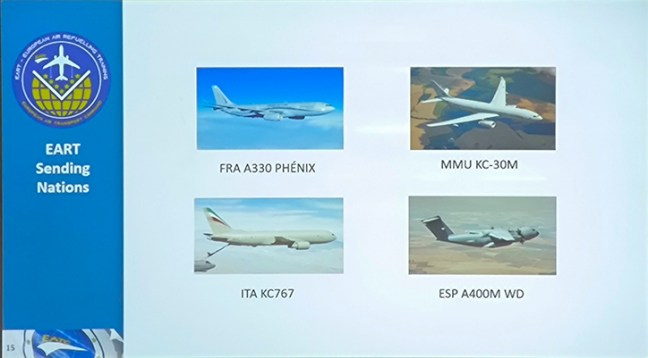
This year’s participants included tanker assets from four countries:
- Spain: A400M (Spanish Air and Space Force, Ala 31 – Zaragoza).
- France: A330 MRTT Phénix (Armée de l’Air et de l’Espace).
- Italy: KC-767 (Pratica di Mare).
- MMU (Eindhoven): KC-30M multinational MRTT.
Fighter receivers included F-15s, F-16s, EF-18s, Eurofighters, and Su-30s, alongside an Indian Air Force contingent.
The Ocean Sky framework balanced 25 blue aircraft versus 15 red, totaling 51 fighters, with around 40 available for daily tasking.
AAR Clearances and the Interoperability Matrix
The AAR Matrix defines which tanker–receiver combinations are authorized. Certification levels — C2 and C3 — indicate technical compatibility and validity periods.
The Spanish A400M operates at C3 level with F-15, EF-18, and Su-30 fighters.
The French A330 Phénix holds multiple C3 approvals, while the Italian KC-767 maintains C2 certification valid through 2029 for heavy receivers.
This matrix is more than an administrative tool — it’s the backbone of multinational AAR interoperability, ensuring safety, consistency, and mission reliability across allied fleets.
EART 2025 in Numbers
- 58 sorties planned across the exercise.
- Over 600 tons of fuel offloaded.
- 140 personnel, plus local Spanish base support.
- Two daily flights, averaging 3.5 hours each, for a total of 200 flight hours.
- Two fully combat-ready crews minimum.
- Five multinational mentors, five liaison officers (LNOs), and one training supervisor under EATC oversight.
These figures highlight the operational depth of EART — a demanding yet efficient training cycle that combines precision, endurance, and cooperation.
Modern Learning Tools
This year, EATC introduced an expanded academic e-learning platform to unify knowledge levels before deployment.
Online courses and interactive modules allowed crews to arrive at Lanzarote with shared doctrinal understanding, ensuring that flight hours were focused entirely on tactical improvement and interoperability.
Witnessing EART in the Air
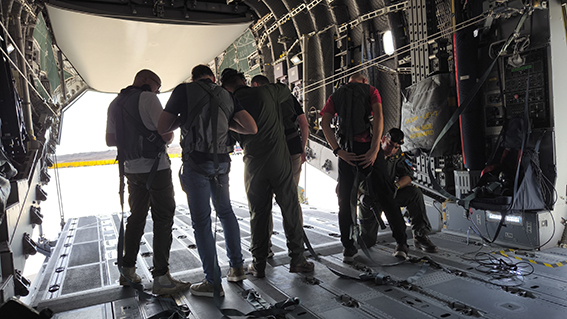
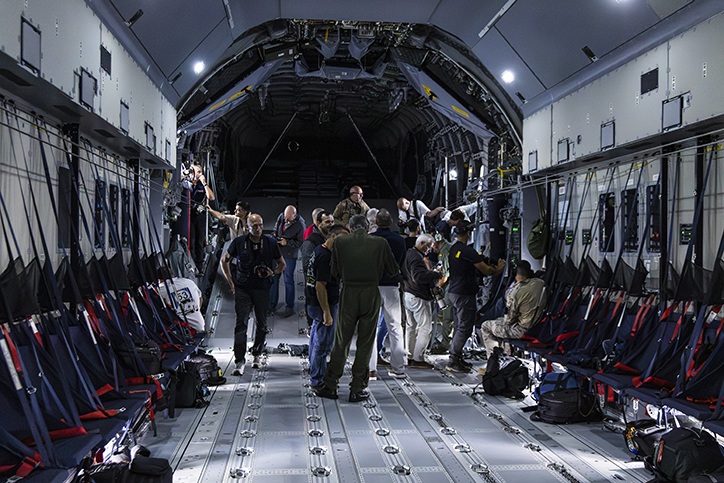
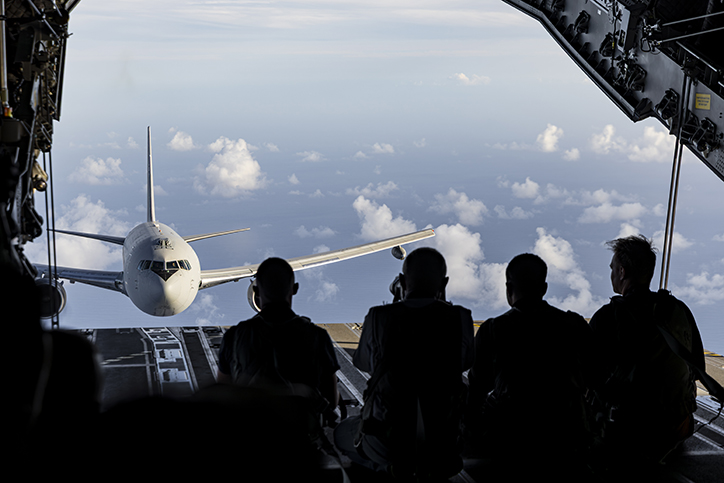
During the Media Day, 20 accredited journalists joined a Spanish Air and Space Force A400M (Ala 31) on an afternoon mission.
Over three hours above the Atlantic, participants witnessed real air-to-air refuelling operations from the aircraft’s open ramp, observing every phase of the contact with frontline fighters.
The maneuver unfolded with impressive precision — a symphony of timing, radio coordination, and aerodynamic control.
For observers on board, it was a striking demonstration of Europe’s capability to act as one integrated force.
Strategic and Operational Relevance
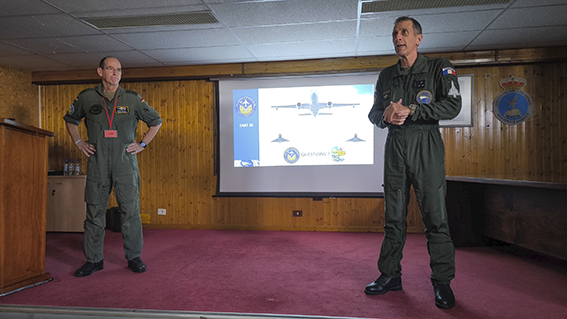
In the closing briefing, EATC leadership placed the exercise within the broader security landscape.
The lessons of Ukraine — the necessity of air superiority and situational awareness — and the challenges of the Indo-Pacific, where distance defines power projection, were central to the discussion.
Commanders emphasized that HVAA (High Value Airborne Assets) such as tankers are no longer auxiliary platforms but strategic enablers requiring protection and tactical integration.
Lanzarote’s unique airspace, weather, and infrastructure confirm its value as a premier venue for multinational AAR training, and plans are already under way to keep it on the European rotation.




The EART 2025 proved that interoperability in Europe is not an ambition — it’s a functioning reality.
From the coordination cells on the ground to the precise alignments in mid-air, every phase demonstrated how allied airpower evolves through practice, not theory.
For those who witnessed it from the ramp of the Spanish A400M, the message was unmistakable: cooperation is not declared — it’s flown, sortie after sortie, in the same shared sky.
Scopri di più da Best Shot Aircraft
Abbonati per ricevere gli ultimi articoli inviati alla tua e-mail.
 Best Shot Aircraft